

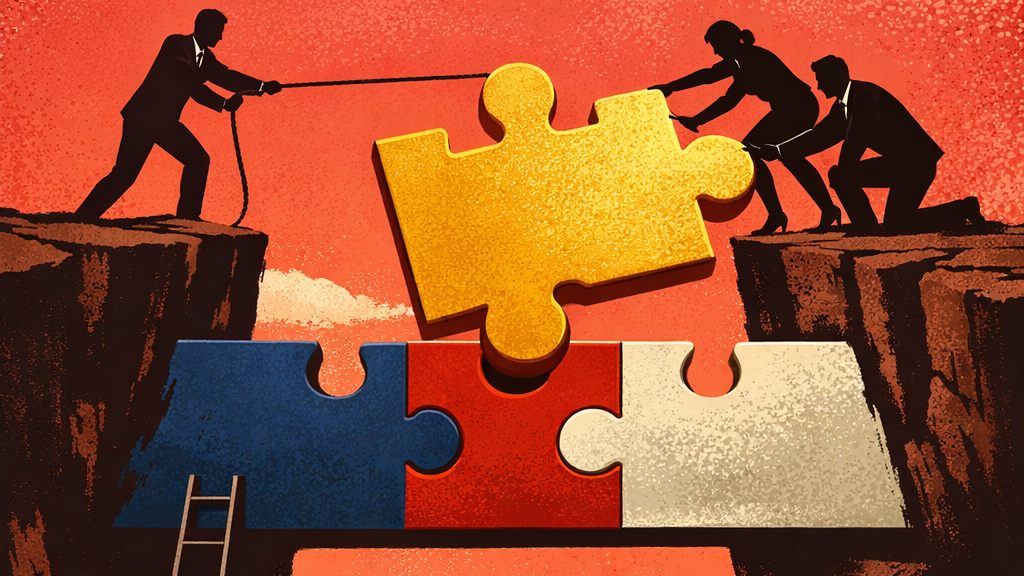
The tricky issue of impact
What do you feel about the word impact?
Used in the context of creating positive change in the world, impact is, by and large, a good thing. Yet do we sometimes find it hollow or wishy-washy? Do some people talk about impact so often that it almost loses its meaning? Or is impact creation built on a naïve view of the world — one in which the business of business should be business, investors should focus on maximising returns, and use the money earned to do good?
I founded Covent Impact to help people create impact effectively. I certainly don’t want my work — or my business — to be built on a false premise.
That said, I think the unease and fatigue around “impact” are real. It’s not that there is no genuine impact being created. It’s that, too often, what we see is ineffective, inauthentic, overly clichéd — or some combination of the three.
Through this newsletter, we hope to offer ideas that are thoughtful, practical and grounded in reality.
In this first issue, I’d like to explore a topic that keeps coming up in my recent conversations: how donors, advisors and partners collaborate – and why impact is rarely, if ever, a solo act.
The Donor – Advisor – Partner “Supply Chain”
“Supply chain” may sound like a materialistic way to think about philanthropy, but at its core it describes how funding, ideas, expertise and delivery come together to create social impact. It is, fundamentally, a way of understanding interdependence.
Imagine you are a producer of chocolate croissants, supplying cafés. You source flour, butter, salt and chocolate. Naturally, you want these ingredients to be high quality, delivered on time and reasonably priced. These are all reasonable expectations as a customer.

Now imagine you are one of the suppliers — the butter producer. Although the croissant maker pays you and may appear to hold the power, their croissants simply wouldn’t be the same without your excellent butter. You, too, have reasonable expectations: to be paid on time, to understand the baker’s requirements, and to have a degree of regularity if they want a reliable supply. And, of course, you have your own milk supplier to manage.
In other words, everyone in the supply chain is engaged in a collaborative relationship. Value is created not by any single actor, but through alignment across the chain. The chocolate croissant would not exist if any part of the chain broke down.
The same is true of the donor–advisor–partner relationship. Donors may feel they are in a powerful position because they provide the funding, but without delivery partners they have limited means to translate money into real-world impact.
Thankfully, I’m seeing fewer and fewer overtly arrogant donors. At the other end of the spectrum, however, some donors are hesitant to articulate their vision or be specific about their objectives. Delivery partners, meanwhile, may be relieved to be left alone — or may feel it is inappropriate to ask for clarity. The result is that everyone is deprived of two valuable resources: ideas and information.
Advisors play a critical role here. They are the facilitators of smooth and productive collaboration. Rather than representing only the donor or only the partner, advisors should hold a holistic view of the resources, relationships and communication needed to create impact — and help all parties work towards a shared goal. Their value lies not in control, but in connection.
This dynamic applies across almost all impact collaborations: from named professorships and cancer research grants, to investments in cafés run by ex-offenders, to philanthropic capital for run-of-river power plants.
When embarking on such projects, each party might consider the following.
Donors / Investors
- What ideas and information are you bringing to the project?
- How do you think about the balance between trusting your delivery partner and being actively involved?
- How can you remain collaborative throughout the project lifecycle — and, realistically, what time and attention can you commit?
Delivery partners (e.g. nonprofits and universities)
- Which elements of the project, from design to execution, would benefit from donor or investor input?
- What does appropriate donor involvement look like from the perspectives of engagement and impact?
- How can communication be structured to maximise transparency and encourage collaboration?
Advisors
- How well do you understand each party’s objectives, preferences, strengths and constraints?
- How do you add value — rather than friction — in idea exchange, governance and execution?
- Which parts of your own experience, knowledge and network can contribute meaningfully to success?
In short, effective impact creation requires everyone to think carefully about how they show up — and how they collaborate.
The donor–advisor–partner relationship is absolutely central to effective impact creation. We’ll return to this theme in future issues.

What happened last month
In late November, the Rockefeller Foundation announced a partnership with Beast Philanthropy, the charitable foundation founded by the famous YouTuber MrBeast, to channel young people’s desire for purpose into meaningful global action.
The partnership aims to create content that makes stories about charitable giving accessible, approachable and actionable.
For me, this is a strong example of how communication in philanthropy is not just about raising money, but about inspiration and motivation. When communication helps advocate for and facilitate positive action, it is itself a form of impact creation.
I look forward to the stories that the Rockefeller Foundation and Beast Philanthropy will tell — and thank you, James Chen, for sharing this development on LinkedIn.
Read more about the partnership.
What I’m reading
Moral Ambition by Rutger Bregman
Bregman does not lack ambition. He opens the first chapter of his book with the line: “Of all the things wasted in our throwaway times, the greatest is wasted talent.” He argues that many talented people — including marketers, consultants and corporate lawyers — could “go on strike and the world would be just fine”.
For Bregman, awareness of social issues is not enough. Even creating some positive change is still not enough. He argues that we have a moral duty to use our talents as fully as possible to do the most good we can — and to aim for truly transformative impact.
My thought is that not all of us are ready to abandon our professions and devote ourselves entirely to social causes. But that shouldn’t stop us from mattering more to the world, bit by bit and day by day.
What are the small things we can do in our daily lives? How can we move, steadily, in the direction of a more impactful life? For those of us with resources to spare, it is worth thinking holistically — about how our talent, experience, networks and money can come together in service of something that truly matters.
A closing thought
Impact creation is rarely neat or linear. It unfolds through conversations, relationships and choices we made over time.
If this issue of the newsletter resonates with, or challenges, your own experience, I’d love to hear your reflections. What kind of collaborations would you like to see? Which relationships feel clear and constructive, and which feel less so? And where might a little more openness or dialogue make a difference?
You’re very welcome to reply to this newsletter, or to reach out on LinkedIn. Dialogue, after all, is where better impact often begins.
Originally published by Francis Hon on LinkedIn Pulse (23 Dec 2025). Source: Impact Is Not a Solo Act.
